
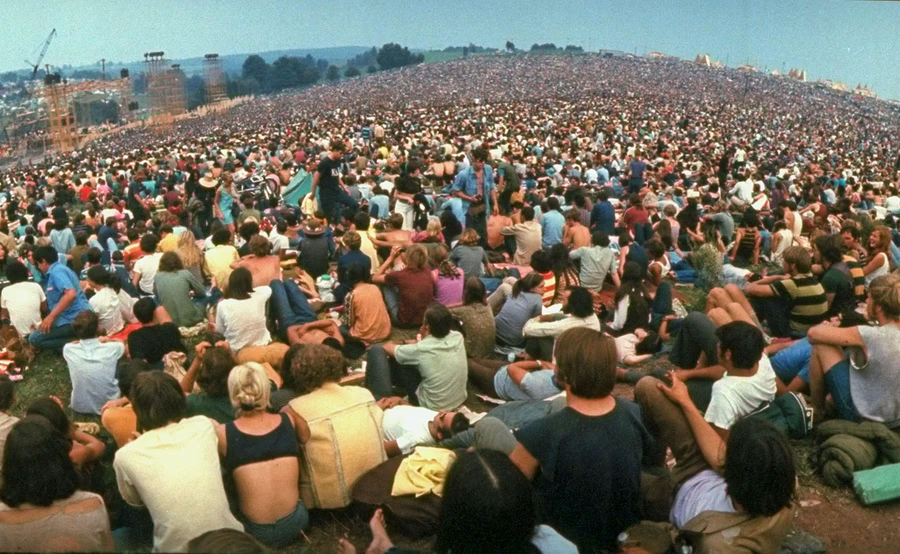
A Moment That Defined a Generation
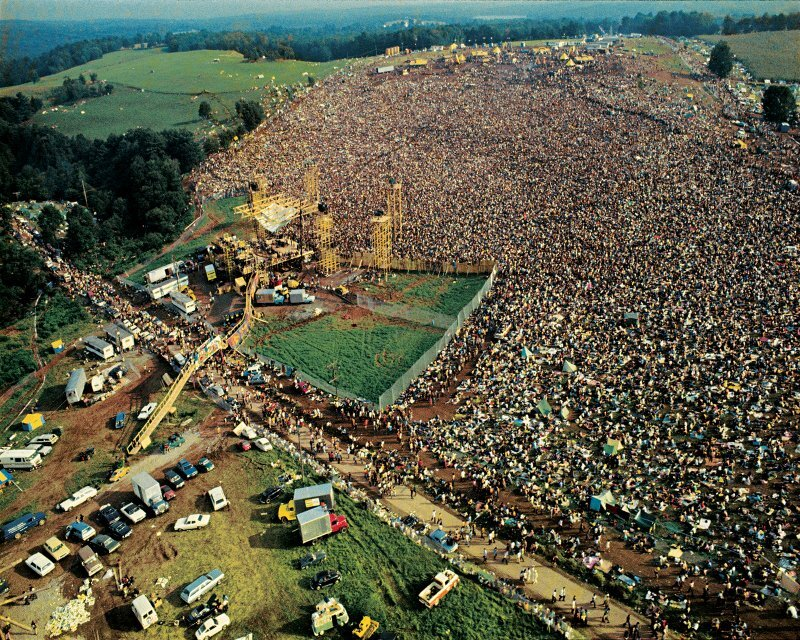
The photographs of Woodstock are more than historical records. They are visual evidence of a cultural turning point.
Captured over three days in August 1969, Woodstock photos reveal a generation questioning authority, redefining freedom, and searching for unity during one of the most turbulent periods in modern history. Every muddy field, crowded hillside, and unfiltered expression tells a deeper story about the values and mindset of the era.
Freedom as a Core Ideal
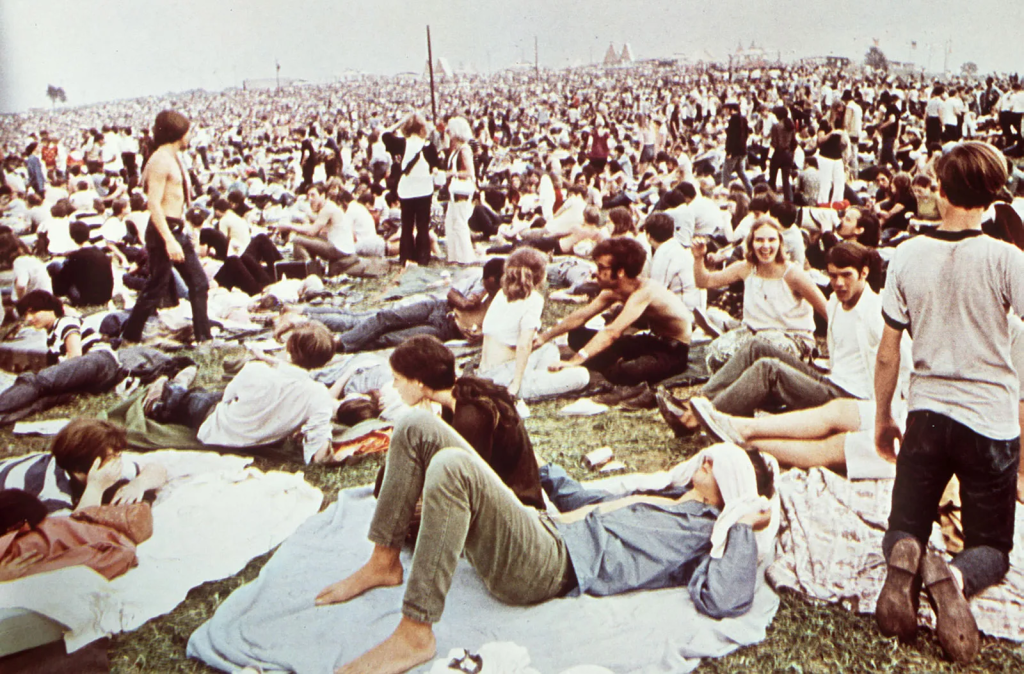
One of the most striking elements in Woodstock photos is the sense of freedom. Clothing was loose, colorful, or absent altogether. People danced, slept, and lived openly, unconcerned with social conventions.
This visual rejection of rigid norms reflects the broader countercultural movement of the late 1960s. Woodstock imagery shows freedom not as rebellion for shock value, but as a natural state — a desire to live without imposed boundaries.
Collective Identity Over Individualism
Unlike many modern festival images that emphasize individual style, Woodstock photos highlight togetherness. Faces blur into crowds, arms link, and strangers share space effortlessly.
This visual unity reflects a cultural moment where community mattered more than status. The images suggest a shared belief that collective experience could overcome political division, war, and social tension.
Peace in a Time of Conflict
Woodstock took place during the Vietnam War, civil rights struggles, and generational unrest. Yet the photos reveal calm, patience, and cooperation.
Despite shortages, rain, and overcrowding, Woodstock images show minimal aggression. The dominance of peace symbols, relaxed body language, and mutual care reflects a generation openly rejecting violence and authority-driven conflict.
Music as a Cultural Unifier
Woodstock photos show music not as entertainment, but as shared ritual. Audiences weren’t passive spectators — they were participants in a collective emotional experience.
The imagery emphasizes closeness between performers and crowd, reinforcing how music became a vehicle for expression, protest, and identity during 1969.
Authenticity Without Performance
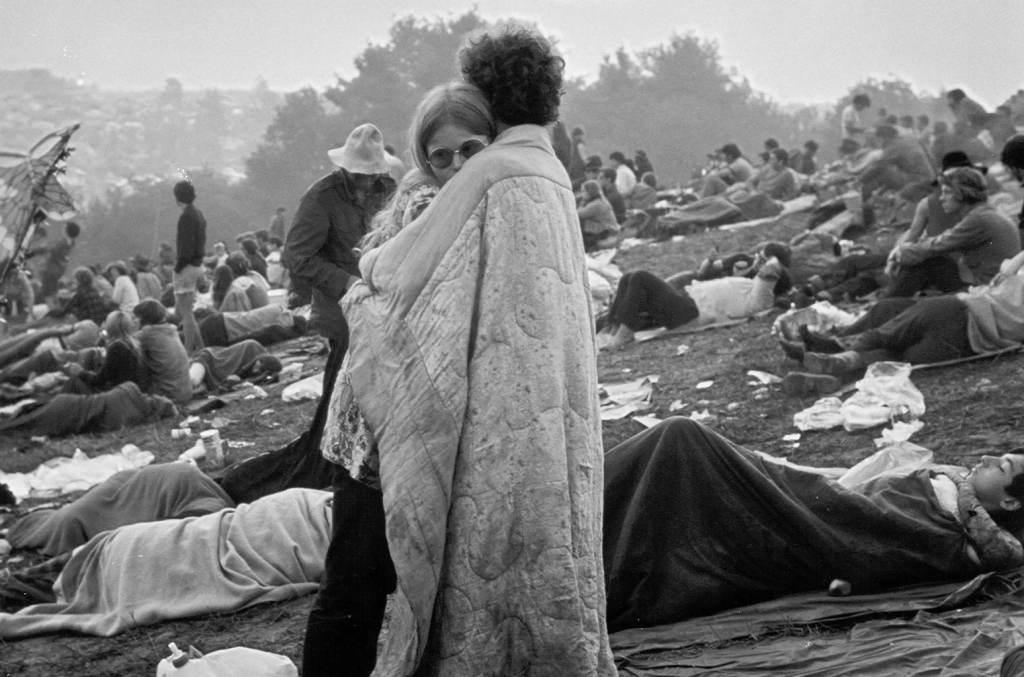
One of the most powerful revelations in Woodstock photography is authenticity. People weren’t posing. They weren’t curating images. They weren’t performing for cameras.
Faces are raw, expressions unfiltered, moments unscripted. This lack of self-consciousness highlights a cultural moment before digital validation — when presence mattered more than perception.
Fashion as Ideology, Not Trend
Woodstock fashion, as seen in photos, wasn’t about trends. It was ideological.
Handmade clothing, reused materials, and natural fabrics reflected anti-consumerism and self-expression. The visuals reveal how fashion functioned as a statement of values rather than a pursuit of status.
Youth Redefining Authority
Woodstock images subtly reveal a power shift. There is little visible enforcement, few barriers, and minimal hierarchy.
Young people created their own order — one based on cooperation rather than control. The absence of visible authority figures in many photos underscores how youth culture was redefining who shaped society’s direction.
Gender Expression and Equality
Photos from Woodstock show fluid gender roles and relaxed interaction. There is little visual separation or expectation tied to traditional norms.
This imagery reflects the rise of feminist thought and sexual liberation movements gaining traction in 1969. Woodstock photos capture a society experimenting with equality and openness in real time.
Nature as a Shared Space
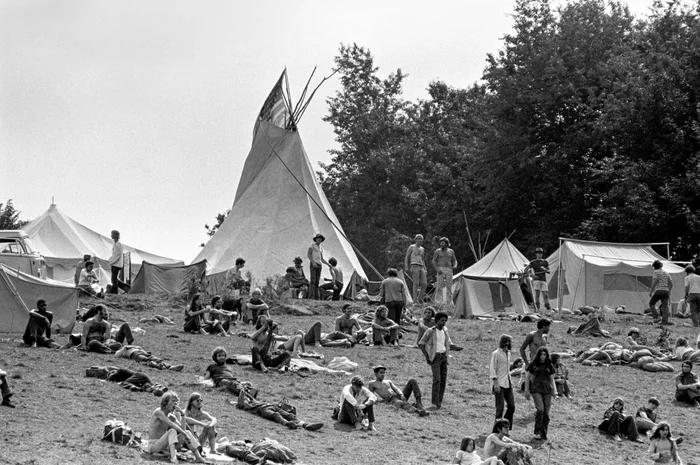
Unlike modern festivals dominated by infrastructure, Woodstock photos show humans embedded in nature.
Mud, rain, grass, and open skies weren’t obstacles — they were part of the experience. This reveals a cultural connection to the natural world, aligned with early environmental awareness movements emerging at the time.
Why Woodstock Photos Still Resonate Today
Woodstock images continue to resonate because they represent something rare: a large-scale moment of trust, openness, and shared humanity.
They show a generation believing change was possible — not through force, but through unity and expression.
A Visual Time Capsule of 1969 Culture
Woodstock photos reveal a culture driven by peace, freedom, authenticity, and collective hope. They document a brief moment when ideals felt tangible and community felt powerful.
More than festival imagery, these photos are visual proof of how deeply culture, values, and emotion can shape history — and how a generation chose to be seen.


